
Author Archive

PCB with Components Manufacturer

April 15th, 2021 | PCB

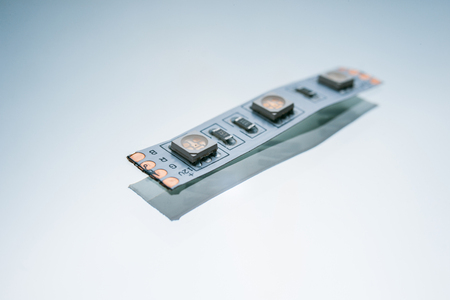
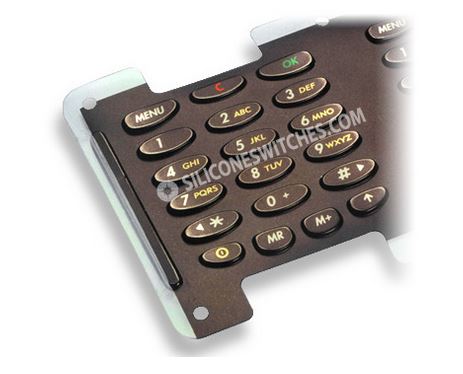
NorthPoint Tech is a PCB assembly manufacturer. We are proud to say that our PCB Manufacturing Company is based in Texas. A few of the services we offer include touch screens, silicone switches, flex circuits, wiring harness and other services.

PCB Prototype Manufacturing-

Let’s discuss what a PCB prototype is before we explain why it’s important to create a PCB prototype manufacturing. PCB (Printed Circuited Boards) is the backbone of all major electronics yet works like the brain by signaling the electricity where to go, bringing your electronics to life. By using a simple machine like a calculator, you use a PCB.

It is common for engineers to design a prototype PCB board prior to manufacturing the PCB for the end products. Sometimes, multiple prototypes are created before the final PCB board is complete. It is imperative to include a prototype into the development of a PCB as the cost of rework is significantly increased if the requirement or board failure is discovered later in the process. It can be common to require functioning prototypes to be manufactured in the same conditions as the final product to ensure the same quality and function are achieved in the end product.

Understanding that a prototype needs to be developed prior to the end product is an important step and there are a few more considerations that will affect your final product such as quality, industries and cost.

Double Layer PCB Manufacturing-

You can also have a double-sided PCB, also known as two-layer PCB is a type of PCB which has conductive copper layers on both sides of the board. Simply put, double sided PCB comes with two sided traces or paths i.e. top layer and bottom layer. The standard thickness of a double layer PCB is 1.57mm.

Benefits of Double Layer PCB Manufacturing-

The main benefit of the double layer PCB manufacturing boards is that you have an extra layer to add more components, which effectively increases the density of the circuit. With more space available of the circuit board, this increases the flexibility of the design, enabling you to place more components and have room for extra connections if needed.

Double layer PCB manufacturing boards tend to use more complex circuitry as there is more space. This means that these boards are perfect for advanced electronics or demanding applications.

Being able to use both sides of the circuit board effectively reduces the size of the board needed. This can be a great cost-saving which makes double layered PCB manufacturing boards less expensive.


The Manufacturing Steps of Flex Circuit Boards

March 11th, 2021 | Circuit Boards

Are you considering a flex circuit for your product? These boards are perfect choices for various applications due to their incredible characteristics.

In the future, the trend of flexible PCB is dramatically increasing and you will find it in all electronic devices. We will break down the process of flexible printed circuit in manufacturing steps for a better understanding.

The first step involves the flex PSB build up. To save polyimide, it is important to keep circuits close with each other as much as possible. You can achieve it by using the nesting technique.

Next, you can add a slight amount of extra material to the flex circuit beyond the designer’s limit. This small amount of extra material commonly known as a service loop. Looping enhances the servicing length and assembly of the circuit.

The sizing conductor ensures the greatest flexibility of the circuit and is worth to select the thinnest copper, especially when you want to use the circuit for dynamic applications.

Etching process takes place by utilizing the etching factor. You can use this tool to compensate for any isotropic loses in the manufacturing process. During the etching process, line width loss is almost twice the copper foil thickness.

You can achieve routing of the conductors on a flex circuit easily. It improves the folding and bending by reducing stress in these specific regions.

You should create ground areas crosshatched if the electrical allocation is adequate. Afterward, you can improve the flexibility of the circuit. All you need to reduce the weight of the circuit board.

Let’s examine what happens in the process of flexible printed circuit boards.

It’s possible for the manufacturer to create holes as small as possible. These types of vias make capable of the flexible PCB layout to be well inclined.

The pads and land termination points on the flexible circuits need filleting. By using this technique, you can multiply the area of the pad and distributes the stresses.

Button plating method creates a substitute plated through-hole. The only difference is that manufacturers use copper to create vias and through-holes.

In this last step, consider physical constraints as manufacturers concentrate on some other useful components of Flex PCB. There are many types of cover coating and have many unique traits.

Overall, flexible PCBs are mostly manufactured by utilizing these three steps. This process can vary from one manufacturer to another.

What it Takes to Incorporate Touch Screen Technology into Your Product Design…The Basics

March 9th, 2021 | Touch Screens

As personal touch devices have become commonplace, users now expect touch interactivity in almost all technologies. All product designers should be considering touch screen interaction in their design. Knowing what you need is an important first step in designing a touchscreen product.

Who is your user and what are their needs? It’s important to identify the age range of users, language, location and any additional characteristics like profession, average time on page etc. From here you can better understand how users will utilize the application and therefore design custom touch screens accordingly.

Think about design with touch. Touch screens quite literally place information in the users hands and it’s important that your design matches the users touch workflow. The last thing you want is for your users to feel like they need to “figure out” how to use your application. To prevent this, you’ll want to focus keeping navigation elements simple, clean and consistent.

Consider trigger elements to optimize usability such as large fingers to reduce errors and spacing elements far enough apart to avoid them accidentally being pressed. Hands can literally be in the way. The best practice is to position the labeling information on or above these elements (and not underneath them) so that information doesn’t get covered by the hands. Also, since most users are right-handed, consider placing information on the left side (so users can still read it while touching the buttons).

Familiarity will be your friend. Your users are probably well acquainted with many other interfaces that they frequently use. Help users feel more comfortable by creating layouts that are similar to the interfaces with which they are already familiar. Be consistent and use the exact same language, layout, and labeling terms throughout all menu options.

More and more new products are incorporating touchscreens to further enhance the user experience. But to make a touchscreen implementation truly successful, these important considerations need to be taken during the design of the user interface. Touchscreens have become necessary input devices because they are intuitive and easy to use. Incorporating basic touchscreen usability features into the interface design will greatly improve user engagement and satisfaction.

How to Choose the Right Flex PCB Manufacturer

February 22nd, 2021 | PCB

Flexible PCB stands above the rest of PCB options in terms of demand since they find substantial use in an array of electronical devices. Projections show the PCB industry going from 63.1 billion in 2017 to 76.9 billion by 2024. So how do you go about selecting the best flex PCB manufacturer? It is crucial to do your research before selecting a flex PCB manufacturer as this misstep can cost you time and money.

Who is the manufacturer?

Quality should be the first point of consideration when selecting a flex PCB manufacturer. Manufacturing flex PCBs successfully increasingly requires higher-end equipment and software that analyzes and predicts material movement. Therefore, selecting a manufacturer with ample proof of each of these resources is crucial. A smart move while selecting a PCB manufacturer is to check the technology they are using. Old and obsolete software design is no longer beneficial. You should choose a manufacturer that uses the latest technology to design your PCBs.

A skillful and experienced manufacturer. Producing a flexible PCB requires a skillful technician with the knowledge to provide high quality flexible PCB is important. They should have expert designers and a specialist team who has vast knowledge in the field.

Does the manufacturer strictly comply with the certification and standards? Confirm they follow and adhere to the rules of UL, ISO and IPC to name a few. It will save a lot of time and effort if your manufacturer can provide pre-approved, UL-certified flex PCBs. This will ensure your work is smooth and quality is not affected.

What is the PCM Manufacturers Process?

While it may seem like a lot of work to ask these questions and go through testing, it is a necessary step that will save you in the end and ensures you are getting the best flex PCB manufacturer.

Confirm the flexible PCB manufacturer has the ability to produce your flex PCB according to the shape you need.

Testing is an essential step to ensure functionality and integrity of the flexible PCB boards.

Does the flex PCB manufacturer have the ability to supply multiple types of components-can they help source the parts or have in stock?

Before the flex PCB goes into full production, the flex PCB manufacturer should provide a model for a successful production. This will ensure the boards are functioning as desired.

In the end, it’s tempting to go with the cheaper option, but it will likely be at the cost of manufacturing time and skill. Be sure to do your research and ensure you are getting the best flex PCB manufacturer.

A Short History of Membrane Switches

February 10th, 2021 | Membrane Switches

How long have membrane switches been around? While the first real membrane switch panel came to market in the early 1980s, it was the previous decade that kicked off the membrane innovation. The very first iterations of the membrane switch panels were actually screen-printed graphic overlays. Their sole purpose was to improve the appearance of the mechanical keyboards underneath them.

By the 1980’s, the membrane that came to market was polycarbonate. Although they made the membrane switch panels more modern, they were difficult to use and didn’t provide tactile feedback causing common mistakes. They were based on resistive technology and were eventually dismissed because the material was brittle, leading to cracks around the keys.

Engineers switched to using polyester as the base material and changed the membrane switch panel design  in regard to composition and structure, which eliminated the problems of the early years. Then in the late 1980s, the first membrane switches with domed keys were made.

Over the course of the next few decades, a number of innovations made the membrane switch panel an even more desirable product. It has become increasingly compact and can be integrated into products without constraints and allows for customization. Its flexibility and slim profile also allow for it to be installed on a curved surface. Another major step in the evolution of membrane switch panels was the addition of LEDs. At first, LEDs were simply used to backlight keys. The advent of LED and more sophisticated optical fibers further advanced the design possibilities, all while facilitating the use of these interfaces. Today, they provide a wide variety of interesting and effective display options for membrane switches. The biggest breakthrough, however, was the increase in switching cycles to over one million operations when gold-plated metal snap domes came on the scene.

Through the years, membrane switches have also become easier to add to designs. The back of the keyboard can be fitted directly to a custom circuit board. Directly mounting them like this on a printed circuit board makes for much more compact designs. Display, touchscreen, mouse pad, analog potentiometer—all of these elements can be added quite easily. The custom design possibilities are virtually unlimited. For more a longer detailed history of custom membrane switches, see the link here.

Myths to Ignore About Flexible Circuits

September 11th, 2018 | Flexible Circuits
Many people are under impression that flex circuits are a new type of technology. This couldn’t be further from the truth! The idea behind flex circuits was first birthed more than a century ago. And while flex circuits have certainly come a long way since then, they’re not new by any stretch of the imagination. They’ve actually been produced in large volumes for more than 50 years now. Here are some other common myths associated with flex circuits.

Myth 1: Flex circuits are more expensive than rigid circuit boards.

If you compare the price of one single flex circuit to one single rigid circuit board, you’ll likely find that the single rigid circuit board will be cheaper. But if you factor in a bunch of other aspects, you’ll see why flex circuits are considered to be the more affordable option. For example, when you utilize flex circuits, you usually won’t need to use as many connectors and wire harnesses. That alone will save you money when it comes to both materials and labor. It’s important to consider things like this before automatically assuming flex circuits are more expensive than rigid circuit boards.

Flexible Circuits

Myth 2: Flex circuits aren’t as durable as rigid circuit boards.

Because rigid circuit boards are, well, rigid, most people believe they’re more durable than flex circuits. But as long as a flex circuit is designed properly, it should last for just as long as a rigid circuit board does. There is some additional strain put on flex circuits that are made to fit in tight spaces. But again, as long as a flex circuit is designed to withstand that additional stress, it’ll prove to be every bit as durable as a rigid circuit board.

Myth 3: Flex circuits aren’t flame retardant like most rigid circuit boards.

If you need a flame-retardant circuit board for a piece of equipment, you might think rigid circuit boards are the right choice. However, flex circuits can also be designed to meet UL and CSA flame retardant rating standards when coated in flame retardant substrates. These flex circuits will be just as safe to use in tough conditions as any rigid circuit boards.

Those are just a few of the many benefits of flex circuits, as opposed to untrue myths. Call us at 915-591-6300 to learn more about flex circuits and how they work.

Things Designers Consider When Making Flexible Circuit Boards

September 4th, 2018 | Flex Boards

Many industries use flexible circuit boards for a wide assortment of needs. You’ll find flexible circuit boards tucked inside of everything from cars and heavy equipment to consumer electronics and medical devices. The designers who create the flexible circuit boards for these industries need to consider many things when making them. Here are just a few of the considerations they have to keep in mind at all times.

The space between the traces and pads on a flexible circuit board

Flexible circuit boards are typically designed to be as small as they can possibly be. Therefore, one of the things designers need to worry about most is the space between the traces and pads on a flexible circuit boards. They must eliminate as much space as possible between them.

Designers Consider

he distance between the components of a flexible circuit board and the edges

Another aspect of flexible circuit boards that designers need to think about is the distance that exists between the different components of a flexible circuit board and the edges of it. The goal is, again, to use the shortest distances possible to make flexible circuit boards as compact as they can be.

The copper thickness of a flexible circuit board

The copper thickness of a flexible circuit board can impact it in several ways. It can affect the current carrying capacity of a flexible circuit board as well as the thermal performance of it and even its impedance. If a flexible circuit board doesn’t have the right copper thickness, it could take a toll on its reliability and functionality.

Northpoint Technologies has earned a reputation for being one of the best in the business as far as designing and manufacturing flexible circuit boards. Call us at 915-591-6300 today to find out why our customers have been coming to us for almost 30 years now for flexible circuit boards.

Common Household Items That Use Flexible Printed Circuit Boards

August 23rd, 2018 | Circuit Boards

More than 60 percent of the people in the world use a cell phone on a regular basis today. That number is expected to grow to almost 70 percent in the coming years. Yet, it would be impossible for everyone to enjoy the benefits of having a cell phone if not for flexible printed circuit boards. These circuit boards are found tucked inside of most cell phones. Here are a few other common household items that rely on flexible printed circuit boards.

Computers

Much like cell phones, many of today’s computers are outfitted with flexible printed circuit boards that power them and allow people to use them almost anywhere. While rigid circuit boards used to be the norm in lots of early computers, flexible options have become more popular over the last decade or so.

Common Household Items

Televisions

Most people have televisions scattered all over the place inside of their homes these days. You’ll find TVs in living rooms, bedrooms, basements, and more. Most of those TVs contain flexible printed circuit boards. TV technology has grown by leaps and bounds over the years, but flexible printed circuit boards remain a constant in them.

Clocks

Most people probably wish they could throw their alarm clocks out the window in the morning when they go off. However, if they did, they would likely end up getting fired from their jobs for being late. Flexible printed circuit boards are found inside of many modern-day alarm clocks and allow them to work the way they’re supposed to day in and day out.

Flexible printed circuit boards play a very important role in your everyday life, even if you don’t necessarily realize it. Northpoint Technologies supplies companies that need these circuit boards with them. Call us at 915-591-6300 today to find out about how our products can help you.

How Silicone Rubber Keypads Can Help Your Daily Operations

July 18th, 2018 | Silicone

Businesses in an array of industries can benefit from the use of silicone rubber keypads. They are used to help create remote controls, calculators, control room keypads, and so much more. Your company can start experiencing the advantages of silicone rubber keypads if you decide to invest in them. Here are just a few of the benefits that you’ll enjoy with them.

Silicone rubber keypads are water resistant.

When you place a silicone rubber keypad on a device, you won’t have to worry about it getting damaged by water. These keypads are designed to work in wet environments. Their water resistance will also allow you to clean your devices without worrying about water or soap getting inside of them. That makes them especially useful in hospitals and other facilities where sterilization is key.

Silicone rubber keypads

They can also be utilized in any temperature.

Whether you work in a very cold environment or a very hot one, your silicone rubber keypads won’t be affected at all by the temperature. They can stand up to any heat and continue working in any cold. This will help keep your devices protected from the time they’re first manufactured to the time you decide to upgrade them down the line.

They don’t make much noise at all.

Do you want to avoid distracting others while working with your devices on the job? Silicone rubber keypads will keep your devices as quiet as they can be. The keypads feature an elastic structure that prevents keys from making any noise when they’re pressed down.

They can be customized for almost any device.

No matter what kind of device you’re using, you can have a silicone rubber keypad made for it. The keypads can be customized to fit your device perfectly so that you’ll get to experience all the benefits of them for yourself.

Northpoint Technologies can create silicone rubber keypads for your company and tell you more about the advantages that come along with using them. Call us at 915-591-6300 today to hear about how rubber silicone keypads can help you.

What Are the Advantages of Silicon Rubber Keypads?

July 12th, 2018 | Silicone

If you need keypads for an electronic product that you’re creating, you should consider using silicone rubber keyboards. There are many benefits to incorporating silicone rubber keypads into your design plans. Let’s take a look at several of the advantages that come along with silicone rubber keypads below.

Silicone rubber keypads are comfortable to use.

If workers or customers are constantly punching away at the keypad, they’re going to experience some discomfort if it’s made out of plastic. Silicone rubber keypads, on the other hand, will prove to be very comfortable since all of the keys will be as soft and as smooth as they can be. People will actually enjoy using their keypads when they’re made using silicone rubber.

Custom Silicone Keypads with Very Bright Colors

They’re both waterproof and dustproof.

Water and dust are two of the biggest enemies of all electronic products. When you create silicone rubber keypads for your electronics, those who use them won’t have to worry about water and dust at all. Silicone rubber keypads are waterproof and dustproof and will prevent moisture or dust from making their way into an electronic. This will really come in handy for those companies creating electronics that are going to be used by commercial clients.

They’re an affordable option.

While silicone rubber keypads come jam-packed with benefits, you won’t have to pay a fortune to get your hands on them. In general, these types of keypads are a lot less costly than other types of keypads. You’re going to have to make an investment into any keypads you purchase, but you won’t have to make a huge one when you choose silicone rubber keypads.

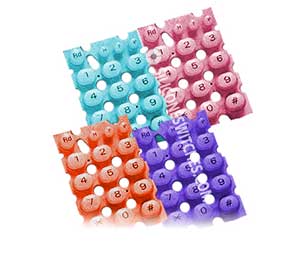
Silicone rubber keypads come in all different colors and styles. Northpoint Technologies can provide you with custom silicone rubber keypads in just about any bright color. Call us at 915-591-6300 to place an order.