Author Archive

Cable Assembly vs. Wire Harness

October 24th, 2017 | Wire Harness

Cable assemblies and wiring harnesses are used in many situations where multiple wires or cables need to be run between different locations. While both cable assemblies and wire harnesses serve a similar purpose, there are distinct differences between these products. Here’s how to know whether you need a cable assembly or a wiring harness:

It may be helpful to distinguish between wire and cable before considering the difference between a wire harness and a cable assembly. While these two products are similar, there are also differences as well. Both wire and cable are designed to carry electricity from the source to a destination. Wire consists of a metallic strand that is often sheathed, whereas a cable consists of multiple wires that run together within a single sheath.
Wire Harness

Wire harnesses and cable assemblies both share a similar purpose. Both are used to bundle multiple wires or cables together to keep them organized. There are many situations where it is desirable to keep similar wires organized together, including automotive, computer, and machine applications.

Wire Harness

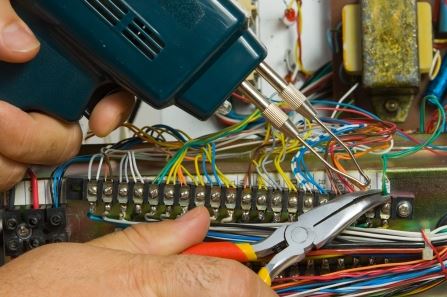
A wire harness is wrapper or sheath that bundles wires or cables together. The external sheath of a wire harness is typically made from a thermoset or thermoplastic material. The wire harness serves to keep the individual wires or cables organized.

Cable Assembly

A cable assembly is similar to a wire harness, but features a more durable sheathing. Cable assemblies are used instead of wiring harnesses when exposure to environmental factors is a concern. The external sheathing on a cable assembly may be made from vinyl, thermoplastic rubber, or shrink wrapped thermoplastic. The more durable sheathing on a cable assembly serves to protect the cables or wires from a variety of threats like heat, abrasion, moisture, and friction.

Northpoint Technologies, Inc. specializes in the engineering and fabrication of custom cable assemblies and wire harnesses. We are more than just a cable assembly company. We are also experts in our customer’s wiring needs. Contact us today at 915-591-6300 to learn more about our services or to request a quote.
What Are Circuit Boards Used For?

July 7th, 2017 | Circuit Boards

Northpoint Technologies is a company known for things like touch screens, silicone switches, flex circuits, and wiring harnesses. This is a long way from the electronics of old, when vacuum tubes were used and components had to be soldered together by hand to things like terminal strips and tube sockets. Technology itself has come a long way in a couple generations, and Northpoint is on the cutting edge of technology today.

For instance, printed circuit boards are a development that makes connecting components simpler and cheaper than the way it “used to be done.”

Circuit Boards

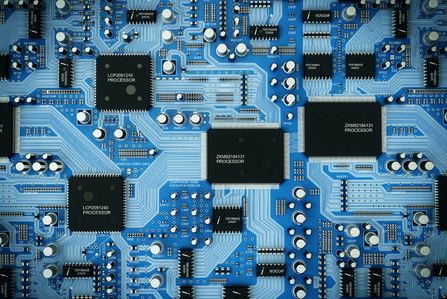
Printed circuit boards are conveniently thin and useful boards. They’re made from an insulating material and have a metal coated surface. They have pathways for electricity thanks to etches made in the metal with acid. Solder is used to mount components on the surface of these boards.

Rugged in style, printed circuit boards can be quite small if need be, and holes drilled in them allow easy insertion of things like resistors and capacitors. Automated processes make it possible for these to be soldered without the need for a human to touch them.

Examples of Circuit Boards

Perhaps the greatest example of where printed circuit boards end up in a place where the general public sees them would be modern day computers. If you’ve ever opened up a computer case to see the guts of the machine, you will have seen actual printed circuit boards in there. They perform all sorts of functions, from “memory” to “video” and more. Furthermore, boards like these are found elsewhere in many household items, such as TVs, stereos, digital clocks, microwave ovens and people’s personal cell phones. In essence, today’s technologically advanced world literally runs on printed circuit boards. Without them, life/society as we know it wouldn’t exist.

Printed circuit boards have to come from somewhere, right? They have to be made, and that’s something that Northpoint Technologies takes care of– you can browse the website to see the various products offered such as flex circuit interconnects, attachment pins, stiffeners, and shielding. Northpoint not only makes printed circuit boards, but also the individual components associated with these boards.

For more information, please call Northpoint Technologies at 915-591-6300.

The Benefits of Flexible Circuits

July 3rd, 2017 | Circuit Boards
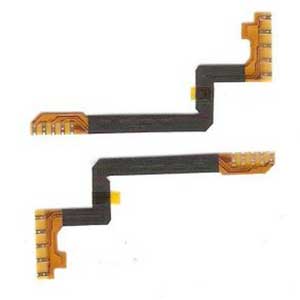
Flexible circuits got their start around World War II as a replacement for wire harnesses. Basically, flexible circuits are an array of conductors bonded to a thin dielectric film. They’re used in all sorts of industries, including for automotive, medical, telecom and commercial purposes.

What are some of the benefits of flexible circuitry?

The Advantages of Flexible Circuits

When circuits are flexible, they can simplify system design, reducing the number of levels of interconnection required in an electronic package. Flexibility allows for unique designs which help solve interconnection problems, reducing overall package size and making installation/repair more practical and cost effective in the long run. Design options are endless as flex circuits are not limited to two dimensions.

Single & Double Flexible Circuits

Before the assembly of components, flexible circuitry can be tested. During installation and/or execution, they can be manipulated several times without electronic failure. Furthermore, they’re thin and less heavy than other options. For instance, thickness can be as thin as .004 inches. Compared to wire harnesses, flexible circuits weigh a lot less. They solve space and weight problems that rigid boards cannot solve.

Using flexible circuitry eliminates the need for connectors and solder joints, therefore reducing costs. They don’t need to be routed, wrapped and soldered, therefore saving money. Also, flexible circuits are able to dissipate heat at a better rate compared to other dielectric materials thanks to the larger surface-to-volume ratio and compact design. Aesthetically, they improve the look of the internal appearance of an electronic package.

Flex circuits are so flexible that they can be utilized in highly complex/high density configurations, handling complex interconnections with single/double combinations. They’re also known to withstand hostile operating environments. Thanks to their streamlined design, there’s more room for the flow of cooling air through an electronic application.

Reliable and durable, flexible circuits are thin, streamlined, and weigh less than the competition. Therefore, they’re a great choice for many industries.

Northpoint Technologies supplies companies and organizations with high quality flex circuit solutions at competitive prices. If you need custom flexible printed circuits and/or flexible interconnects, Northpoint Technologies is a world-class supplier of them. Our company was originally called Flexible Circuits, for the record. We’ve continued to focus on flex circuits while expanding our business to include things such as touch screens, silicone switches and more.

The Evolution of Touchscreens

April 21st, 2017 | Touch Screens

Not too long ago, most pre-millennials would not have fathomed there could be a day where they would carry around the world around in their pocket and use a touch screen to hear and experience so many incredible people, places and things. Many people grew up with computer screens that were simply filled with green-colored text on brown/black screens, and you had to have a mouse and keyboard to interact with said screen. Meanwhile, many games required you to use a “a joystick” (younger folks may have to do a “Google Image” search) with a button to enjoy games like Pac-Man.

Evolution of Touchscreens

However, if you went to Disney World’s Epcot in the late 80s or early 90s, they displayed the “latest technology” for people to enjoy, which included a touchscreen visitors could use. It was quite the site to see for many people, as they were able to choose options and pictures based on what their fingers chose. Oh, the power one felt! A finger was like a magic wand.

Today touchscreens are more sophisticated than ever and they’ve become ubiquitous. Interestingly, the technology that made them possible started to take shape in the 1960s. It was 1965 when E. A. Johnson invented the first finger-driven touchscreen. Then, in 1971, “PLATO IV” became the first touchscreen used in a classroom. These primitive developments were built upon such that the 1980s–the age of computers becoming mainstream– became the time when real strides were made in touchscreen technology. For instance, did you know HP released its HP-150 in 1983, and it was one of the first touchscreen computers? Ten years later, in 1993, the first touchscreen phone debuted.

Northpoint Technologies produces touch screens for today’s needs. From assembly lines to operating rooms, Northpoint Technologies’ touch screens are found worldwide, providing people with crisp, consistent displays. For more information, please call 915-591-6300.

The Benefits of Touch Screens

November 17th, 2016 | Touch Screens

Today touch screens are ubiquitous, but for many of us, they’re still a relatively new technological development.

Some people may remember using touch screens in their infancy a couple of decades ago at places like Epcot Center in Disney World or at science museums. At the time, people were amazed you could touch a screen and move things, since before you always needed a mouse or arrows on a keyboard. Who would have thought at the time that touch screens would become the new “norm” years later?

Benefits of Touch Screens

Indeed, in today’s world touch screens are the new standard. People expect them!

What are some benefits of touch screens? Well, for starters they speed up the process of interacting with a device. Instead of using arrows on a keyboard or a mouse connected by a wire to a computer, touch screens utilize a person’s finger to pick and choose exactly what they want when they want it.

Touch screens are easy to use. They’re typically intuitive. If you’ve watched a three-year-old use an iPad lately, you’ll notice how they take to it like a fish to water. They can use their finger to swipe to the next slide, photo, or graphic, and it’s like breathing air– it just comes naturally to them.

Touch screens are becoming increasingly integrated with “The Internet of Things,” such that people of all ages utilize them. People with physical limitations, senior citizens and others find touch screens to be quite accommodating compared to previous things like keyboards and mice.

Interestingly, touch screens are also used to prevent unauthorized entry. For instance, a person may need to use their finger to enter a code into the screen in order to gain access to something, such as an email account or to unlock a door.

In our digital world, the future has arrived with the popularity of touch screens.

Northpoint Technologies, Inc. specializes in helping businesses construct the right touch screen for their needs. For more information, contact them today.