
Author Archive

What Does an ISO Certification Mean?

June 22nd, 2018 | Miscellaneous

Do you want to let your customers know that you’ve done everything in your power to produce high-quality products and services for them? To do it, you should make sure your products and services have ISO certification. The International Organization for Standardization has created more than 22,000 standards for those that specialize in creating certain products and services. And by living up to the standards established by your specific ISO certification, you can ensure your customers that your products and services are designed with quality in mind. You can also ensure them that you’re constantly trying to improve upon your products and services.

Those businesses that have obtained ISO certification have proven that they can produce high quality products and services through a strict auditing process. They have shown the ability to conduct rigorous inspections on their products and services and have also kept accurate records to stay in accordance with their ISO certification. They keep a close watch over the production process that they use and make tweaks to it to show improvement in the future. It allows them to keep their current customer base happy and to use their ISO certification to their advantage when attempting to attract new customers to their business.
ISO Certification

Northpoint Technologies has an ISO 9001:2008 certification and uses it to set the quality control standards than are used to produced our touch screens, flex circuits, silicone switches, and more. When you purchase any of our products, you can rest assured knowing that we’ve done everything necessary to create products that are of the highest quality. We utilize a tried and true method of producing all of our products and adhere to the guidelines set forth by our ISO certification.

To request a quote from us or to find out more about how we use our ISO certification to create the best products possible, contact Northpoint Technologies at 915-591-6300 today.
The Differences Between Rigid and Flexible Circuit Boards

June 6th, 2018 | Circuit Boards

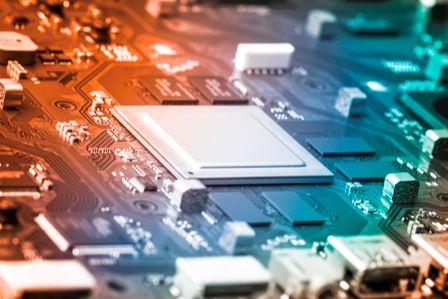
If you open up any technological product on the market today, you will find a circuit board tucked inside of it. The circuit board serves as the backbone of the product and includes all the wires and circuitry that are needed to run it. However, not all circuit boards are created equal. There are rigid circuit boards as well as flexible circuit boards that are used by companies producing new forms of technology.

Rigid Vs. Flexible Circuit Boards

As you might imagine, these two types of circuit boards are quite different. The most obvious difference is that rigid circuit boards are, well, rigid and cannot be bent to fit inside of a product. The company producing it must find a place for it to fit. Flexible circuit boards, on the other hand, come in handy whenever space is limited inside of a product like a medical device, automobile sensor, or other consumer electronic. A flexible circuit board can be used inside of any product that doesn’t have a lot of available space. It’s why they’ve become so popular in recent years.

Rigid and Flexible

While rigid circuit boards remain in the picture because of the low costs associated with producing and installing them, there are also other differences that set flexible circuit boards apart and make them an attractive option for many companies. In addition to saving space, they’re usually a lot lighter than rigid circuit boards. That will result in the product that’s housing them being lighter as well. They’re also very durable and will prove to be shock and vibration resistant. Additionally, companies don’t have to worry about heat warping flexible circuit boards or chemicals or radiation damaging them.

There are so many benefits you’ll enjoy with flexible circuit boards. To get more information on how they work and how they can help your company create superior products, call Northpoint Technologies at 915-591-6300 today.
Flexible Circuits Vs. Printed Circuit Boards

May 23rd, 2018 | Flexible Circuits
Many people are under the impression that flexible circuits and printed circuit boards are one in the same. However, the truth is there are quite a few things that make them different. If you’re planning on using flexible circuits or printed circuit boards in a piece of electronic equipment, you should make sure you know about their differences first. Learn about them below.

Flexible circuits can bend while printed circuit boards cannot.

The biggest difference between flexible circuits and printed circuit boards is that flexible circuits can bend, fold, and twist inside of a piece of equipment without a problem. Printed circuit boards, meanwhile, are rigid and need to have space dedicated to them where they can sit without bending, folding, or twisting at all. This difference is the reason why flexible circuits and printed circuit boards need to be made using different materials.

Flexible

Flexible circuits are made using different materials than printed circuit boards.

Many different materials are used to make flexible circuits and printed circuit boards. Since printed circuit boards are rigid, they usually have a glass reinforcement like FR4 in them. Flexible circuits don’t need this kind of material since they aren’t rigid. However, flexible circuits need to use adhesives that won’t crack or break when these circuits are bent. The adhesives need to be able to stretch to accommodate the flexible circuits. Additionally, flexible circuits and printed circuit boards use different types of copper. Flexible circuits usually have rolled annealed copper that is flexible while printed circuit boards typically contain electrodeposited copper.

Flexible circuits offer more options for designers and engineers.

The great thing about flexible circuits is that they offer more opportunities for designers and engineers who are trying to figure out how to install a circuit board inside of an electronic. That doesn’t mean that flexible circuits are always the better option; however, flexible circuits will give designers a chance to rethink the placement of circuits when they have the opportunity to use them.

Do you want to see how flexible circuits can benefit your company and the products you create? Call Northpoint Technologies at 915-591-6300 today to learn more about the flexible circuits we can produce for you.

Why Your Business Should Consider Printed Circuit Boards (PCB)

May 9th, 2018 | Circuit Boards

More and more companies are utilizing printed circuit boards inside of the electronic equipment they create and use. They’re doing it, in large part, because printed circuit boards allow for them to fit large circuits into small boards that don’t take up much space. Take a look at some of the other benefits these companies are taking advantage of with printed circuit boards.

Printed circuit boards are cheap to produce.

Printed circuit boards have risen in popularity in recent years because they’re cheaper to make than traditional circuit boards. Companies can have them made using mass production, which cuts costs significantly. This allows them to place printed circuit boards into equipment without spending a fortune. These boards are also easy to repair if any problems pop up.

Business Should Consider

The circuits on them do not move around.

All of the various components that are included within a printed circuit board are connected directly to the board through solder flux. This prevents the parts on a printed circuit board from moving around. Therefore, if you use printed circuit boards in a piece of equipment, you won’t ever have to worry about a particular component coming free and moving around inside of it.

The circuits also don’t produce much electronic noise.

When the components on a printed circuit board are all laid out the right way, there won’t be much electronic noise created when you’re using an electronic instrument. The components should be situated so that electronic currents can take short paths to get to where they need to go. This cuts down on radiation and electromagnetic waves, which will result in less electronic noise overall.

Do you want to see how using printed circuit boards in electronic equipment could benefit your company? Northpoint Technologies manufactures flexible circuit solutions for companies at very affordable rates. Call us at 915-591-6300 to get more information on printed circuit boards.

How Touchscreen Technology Can Help Your Business

April 18th, 2018 | Touch Screens

Many smartphones, tablets, and even computers all come equipped with touchscreen technology today. It makes it incredibly easy to navigate around on them. But that’s only one of the many benefits you’ll enjoy when you use a device outfitted with a touchscreen. Here are some of the other advantages of using touchscreen technology.

It makes devices run faster.

When you eliminate the need for a person to use a keyboard or a mouse when working on a device, you make it so that they can work significantly quicker. You also make it so that the devices themselves will be faster overall and much more responsive.

Touchscreen

It makes devices smaller.

Many of today’s devices are smaller and more compact than ever before because of their touchscreens. Smartphone companies used to have to find a way to try and make screens larger while also including a keyboard. However, these days, they’ve been able to do some pretty amazing things with mobile phone screens by getting rid of keyboards and using touchscreen technology instead. It frees up space to create smaller phones that still have incredible screens.

It makes devices more accessible.

Not everyone out there is capable of using a keyboard and mouse to navigate around on a device. Seniors, in particular, have struggled to work with different types of technology in the past because of their size and all the moving parts that came along with them. Touchscreen technology makes it much simpler for them to play around on a device.

It makes devices more durable.

You might think touchscreen technology would make smartphone and tablet screens more susceptible to damage. But in reality, the companies creating these devices have found ways to make them more durable than they probably would be if touchscreens didn’t exist. They’ve also made these screens very easy to clean, which is a good thing since people are putting their fingers and hands all over them all the time.

Northpoint Technologies is making it easier than ever for people and companies to get their hands on advanced touchscreen technology. Call us at 915-591-6300 to learn about the touchscreens we manufacture.

A Quick Look at How Silicone Keypads Work

April 3rd, 2018 | Silicone

You may not have necessarily realized it, but there’s a good chance that you have used a silicone keypad over the course of the last few days. There are many computers, phones, calculators, and more that rely on silicone keypads to perform their basic functions. These silicone keypads may not look like anything special from the outside, but they are actually sophisticated tools used to keep different electronics running properly.

How Silicone Keypads Work

All silicone keypads work a little bit differently. But in general, each keypad operates by forming an angled webbing around a switch center in an electronic item. When you press down on one of the keys in a silicone keypad, the webbing deforms, and when it does, it creates what is called tactile feedback. Then, when you let go of the key you pressed, the silicone keypad returns to its original form with no tactile feedback present. That simple action is what results in a letter, number, or other symbol showing up on your electronic’s screen.

Silicone Keypads Work

Not all electronics utilize silicone keypads these days, but there are quite a few that do because of the advantages that come along with them. One big advantage is that silicone keypads are made up of one single layer of silicone, which prevents dirt and dust from getting down into them. It also prevents moisture from affecting these types of keypads. The same cannot be said for standard keyboards that will stop working if too much dirt or dust or any moisture gets down into them.

At Northpoint Technologies, we have been creating silicone switches for two decades now. We have improved upon them greatly over the years and can supply you with superior products for your company. Call us at 915-591-6300 today to check out the silicone switches we have available at the moment.

What is a Rigid Flex Board?

March 21st, 2018 | Flex Boards
There are different circuit boards that can be used inside of technological applications. One of the most common types is called a rigid flex printed circuit board. This type of board utilizes both flexible and rigid board technologies within a specific application. While some rigid flex boards operate slightly differently than others, most of them contain multiple layers of flexible circuit substrates that are attached directly to rigid boards. The designs used to create rigid flex boards are more complex than those used to make a regular rigid board because they are created in a 3D space. This allows designers to roll, twist, or fold rigid flex boards so that they can fit into almost any application easily.
Rigid Flexible

Rigid flex boards are used in many different types of applications. You will find them in everything from military weapons to cell phones. There are even some rigid flex boards used in medical devices because of the limited amount of space located within them. Rigid flex boards are an excellent option for so many different devices because they take up little space and are lightweight. They are also known for being reliable when they are installed properly in applications.

There is a laundry list of reasons why many technological companies are turning to rigid flex boards when creating applications. The vast majority of them do it because they use such a limited amount of space. But one of the other big advantages of using rigid flex boards is that they allow designers to reduce the number of connections that exist in between the parts on the board. That cuts down on the number of missed connections over time and increases reliability. It’s also easy to test rigid flex boards before they are placed into devices, and assembly costs are reduced dramatically when rigid flex boards are used.

If you would like to find out more about rigid flex boards, Northpoint Technologies specializes in providing them for companies. Call us at 915-591-6300 today for additional information on how they could benefit you.

What is the Future of Touch Screen Technology?

January 12th, 2018 | Touch Screens

Touch screens are now nearly ubiquitous, but they have a relatively short history. Despite a few niche applications that were tried earlier, the first mainstream use of touch screen technology was Apple’s iPhone. The rest, as they say, is history. Following Apple’s implementation of the touch screen in its iPhone, the touch screen quickly gained adoption in a variety of applications. Now, not too many years  later, the touch screen is almost universal.

As the technology behind touch screens has evolved, so too have the possibilities. Initially, touch screens would recognize one touch, much like a click from a mouse. Now, touch screens are frequently capable of supporting multi-touch gestures which greatly increase the versatility of touch screen devices.

Screen Technology

Touch walls are one example of the evolution of touch screens. These cutting edge devices are currently seen only in high-end corporate environments, museums, and higher education institutions.

Another innovation in touch screen technology is optical recognition. This technology adds infrared light to a white backlight to allow the camera to better visualize what is touching the touch surface. The image is then analyzed by a complex algorithm. Some of the advantages of optical recognition technology is that it is fast and is capable of seeing things that are not actually touching the glass – for example, a user’s wrist – to allow for even more intelligent programming.

Optical recognition is also capable of scanning QR-type codes. While there are many examples of how this may be adopted, one illustration is in shopping where product codes can be scanned into a computer for a more interactive shopping experience.

Northpoint Technologies, Inc. has been manufacturing touch screens, flexible circuits, silicone switches and more for nearly three decades. We also distribute electronic components to nationally recognized customers. Contact us today at 915-591-6300 to learn more or to request a quote.

The Benefits of Membrane Switch Backlighting

December 5th, 2017 | Switches

Membrane switches are used in a wide array of electronic devices, from television remotes to microwave ovens. These switches may be used in any application where a thin, flat control panel is required. Many membrane switches are also designed to be backlit.

A membrane switch is a thin, flat panel that is often used with a silicone keypad. Unlike traditional electrical switches that may be manufactured from metal and hard plastic, membrane switches are made from several circuit, separation, and adhesive layers that are joined together to form a thin circuit board. The top layer of the membrane switch is typically a silicone keypad that allows users to activate the circuits on the board.

Custom Silicone Keypads with Very Bright Colors

One of the many advantages of membrane switches is that they can be backlit. This is possible because the silicone keyboards may be designed with varying degrees of transparency. There are several techniques in use for backlighting membrane switches.

An older option was electroluminescent (EL) lamps. While EL lamps are still used on some membrane switches, their short service life has led to the development of other options.

LED lights are also sometimes used for backlighting membrane switches. While LEDs last a long time and use very little energy, they are best used for illuminating one area of a keypad rather than an entire keypad.

Optical fiber may also be used in conjunction with LEDs. This option creates an even distribution of light for effective membrane switch backlighting.

As electronic devices become more commonplace in the home, workplace, and even for recreation outdoors, the use of devices equipped with membrane switches has grown considerably. There are many situations, whether indoors or outdoors, where a backlit keypad is desirable. Cell phones, calculators, microwave ovens, medical devices, alarm control panels, and many more pieces of equipment are equipped with backlit membrane switches to make it easy and convenient to operate the device in low light.

Northpoint Technologies, Inc. manufactures and distributes membrane switches, silicone switches, and other electronic components. Contact us today at 915-591-6300 to learn more or to request a quote.

How Flex Circuits Can Help Your Company

November 3rd, 2017 | Flexible Circuits

Flex circuits play an increasingly important role in today’s advanced electronics. These innovative, cutting-edge electrical circuits are essential in many situations. Here’s an overview of flex circuits.

Flexible circuits, which are often referred to by the shortened term flex circuits, are functionally similar to standard printed circuit boards. The key distinctions with flex circuits are that they are lightweight, thin, and flexible. As with printed circuit boards, flex circuits have strips of conductive metal that carry electricity between connections and other electrical components on the board.

Flex Circuits

The Advantages of Flex Circuits

An obvious advantage of flex circuits is that they are flexible. While electronic devices do not always need to be flexible, there are situations where a flex circuit can facilitate innovative designs. The flexibility of these circuits also means that they can be conformed to fit in irregularly shaped spaces.

Another advantage of flex circuits is their light weight. Traditional printed circuit boards are heavier than flex circuits, and this weight can become an issue with many of today’s electronic devices that are being designed lighter and smaller. Flex circuits may be as much as 70 percent lighter than a comparable printed circuit board.

Flex circuits are also thinner than traditional printed circuit boards. The thin profile of these circuits is also important for compact, modern electronics. Flex circuits may yield space savings of up to 60 percent when compared to printed circuit boards.

Flex circuits provide many advantages over traditional, rigid circuit boards. Design options are improved, while space and weight are able to be reduced. This combination of benefits make flex circuits an ideal option for many modern electronic applications.

Northpoint Technologies, Inc. has been manufacturing and distributing high-quality electronic components for nearly three decades. We specialize in polyimide and polyester circuits that are used by a variety of companies around the world. Contact us at 915-591-6300 to learn how we can help with your flex circuit needs.